Should Children Fear Their Parents?
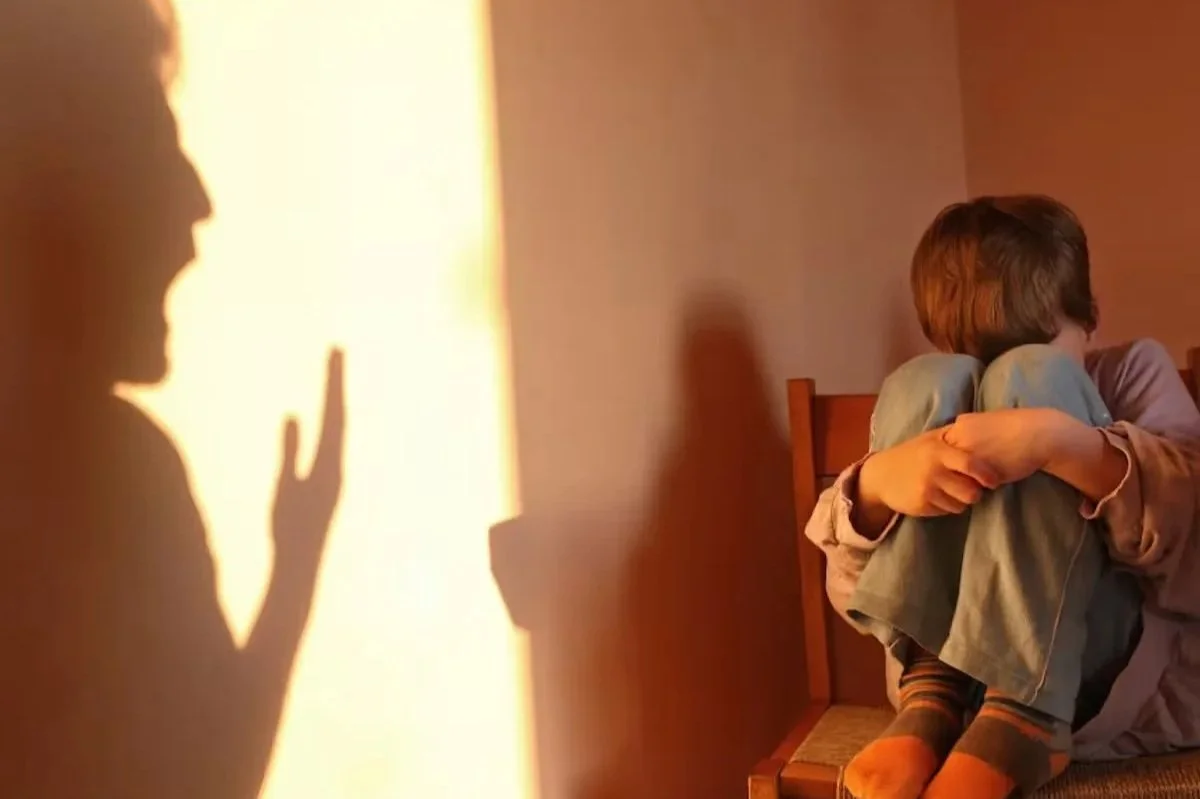
Let’s travel back in time for a second. If you grew up before the early 2000s, you probably remember a very specific sound that struck absolute terror into your soul.
For some of us, it was the heavy footsteps coming down the hallway, or it was the thunderous resonance of your first, middle, and last name being shouted from the kitchen. For many, it was that distinct, unmistakable clink of a dad unbuckling his leather belt. You immediately ran through a frantic mental checklist of your crimes, trying to calculate the impending sentence while your heart pounded out of your chest.
Back then, the reigning gold standard of parenting was absolute authoritarian. The rules were rigid, the expectations were high, and obedience was enforced through a healthy dose of fear. If you dared ask "Why?" the conversation was immediately shut down with the ultimate, unarguable mic-drop: "Because I said so."
Fast forward to today. That generation of kids grew up, went to therapy, had their own toddlers, and collectively decided: Yeah, we aren’t doing that.
But the swing in the opposite direction has created a whole new monster. Now, we have high-concept, extreme gentle parenting where moms are spending forty-five minutes gently negotiating with a screaming two-year-old about why we don't eat dog food.
As a daycare owner who deals with both extremes, I am here to answer the big question: Should your kids fear you? Absolutely not. But they shouldn't view you as a pushover roommate either. Let’s look at the generational shift and why the sweet spot is right in the middle.
The Millennial Flashbacks
Our parents loved us, and they did the best they could with the tools they had. But let's be honest—parenting by fear didn't actually teach us how to regulate our emotions. It just taught us how to be really good liars, excellent hiders, and hyper-vigilant people-pleasers.
When a child’s dominant emotion toward a parent is fear, their nervous system goes into pure survival mode (fight, flight, or freeze) whenever a mistake happens. A child operating in survival mode physically cannot absorb a moral lesson. Fear doesn't build a genuine conscience; it just builds a highly sophisticated radar for avoiding punishment.
When those kids grow up, they don't look back and think, "Wow, I’m so glad I was terrified." They look back and realize they spent their childhood anxious.
The Problem with the "Jellyfish" Alternative
Recognizing that fear is toxic, the modern parenting world swung hard into the opposite lane: Permissive, ultra-gentle parenting.
You’ve probably seen this out in the wild. A toddler is actively kicking a grocery store display, and the parent kneels down in a calm, whispery voice: "I see you have big feelings about the cereal, sweetie. Is your body feeling angry? Let's take a deep breath." Meanwhile, the toddler is completely ignoring them and ripping open a box of Pop-Tarts.
This is what child psychologists call permissive or "jellyfish" parenting. It has zero bones, zero structure, and zero boundaries.
While it comes from a place of pure love and empathy, it completely backfires. Toddlers don't want to be the boss of the house. When a child realizes they have more power than the adult in the room, it actually makes them feel deeply insecure. They don't learn self-regulation because no one is holding a sturdy perimeter to keep them safe.
The Sweet Spot: Authoritative 2.0 (The Loving Coach)
So, if fear is out, and passive negotiation is a disaster, what is left? The daycare holy grail: Authoritative Parenting (not to be confused with authoritarian).
Think of it like being an elite sports coach. If a player makes a terrible pass on the field, a bad coach screams, demeans them, and benches them in anger (the old school). A weak, passive coach sits on the sidelines crying and asks the player how they want to run the team (the extreme gentle school).
An excellent coach steps onto the field, looks the player in the eye, and says: "That was a bad pass, and that's not how we play. Here is how we fix it. Get back out there." They hold the line and demand excellence, but the player always knows the coach is completely on their side.
We want to raise kids who respect our leadership, not kids who jump when we enter the room. Here is what that looks like in real life:
You don't negotiate, but you do empathize: When your toddler throws a tantrum because screen time is over, you don't scream at them, but you also don't turn the TV back on. You calmly say: "I know it’s hard to turn off the show. It’s okay to be mad. But the TV is staying off." You let them cry, you offer a hug, but the boundary stays a solid brick wall.
Accountability over punishment: When your child makes a mistake, your reaction shouldn't cause a panic attack. Your emotional baseline stays a flat line. You guide them through fixing it rather than launching into a lecture. They learn accountability without the accompanying cortisol spike.
You explain the "Why" (When appropriate): You don't owe your kid a debate, but you do owe them logic. Instead of "Because I said so," try: "We have to leave the park now because your body needs lunch and a nap so we have energy for later." It shows you respect their intelligence.
The Ultimate Goal
You want your child to run to you when they mess up, not away from you.
If your teenager makes a massive mistake out in the world ten years from now, you do not want their first internal thought to be, "My parents are going to kill me." You want their immediate instinct to be, "I need to call my parents."
Ditch the fear, leave the leather belt in the past where it belongs, but keep your sturdy backbone. You can be a soft place to land and a firm wall to lean on all at the exact same time.